
The Education Freedom Tax Credit
In a move that expands educational freedom, restores parental rights, returns power to the states, and puts American students first, the Treasury Department and IRS have issued proposed regulations to launch America’s first national school choice program.
In a press release today, it was announced that:
“The U.S. Department of the Treasury and the Internal Revenue Service issued proposed regulations to implement the new Federal Scholarship Tax Credit under section 25F, commonly known as the Education Freedom Tax Credit, the first federal tax credit supporting private contributions for K-12 scholarships. Under the proposed regulations, eligible taxpayers may claim an annual credit of up to $1,700 for qualifying contributions, or up to $3,400 for married couples filing jointly. Treasury and the IRS also issued companion temporary regulations to establish key procedures for states and Scholarship Granting Organizations to prepare for the launch of the tax credit on January 1, 2027.”
The program’s goal is to establish nationwide school choice using the tax code to expand K-12 options. It shifts control from the federal government to parents and states, with three main objectives:
Expands freedom: Anyone can fund scholarships anywhere, removing barriers and supporting students nationwide. For example, donors in wealthier states can fund scholarships in under-resourced areas, creating nationwide educational support.
Restores parental rights: Gives parents financial flexibility to choose the best education for their child. The SGO (which must be an approved 501(c)(3) public charity) collects these donations. States cannot restrict which SGOs participate or dictate students’ private school choices. An SGO under this program is legally required to spend at least 90% of donations directly on student scholarships. Families can use the funds to cover:
Private or parochial school tuition and fees.
Academic tutoring or learning therapies for special-needs students.
Textbooks, school supplies, computers, and educational software.
Incentivizes private investment: Dollar-for-dollar tax credits redirect private money to education (a standard 501(c)(3) donation gives a tax deduction, while this program gives a tax credit. For example, a $1,000 donation decreases your federal tax bill by exactly $1,000.). This credit does not divert money from local or state taxes, which make up the large majority of school funding, and does not draw from existing federal programs.
Which states have opted in?
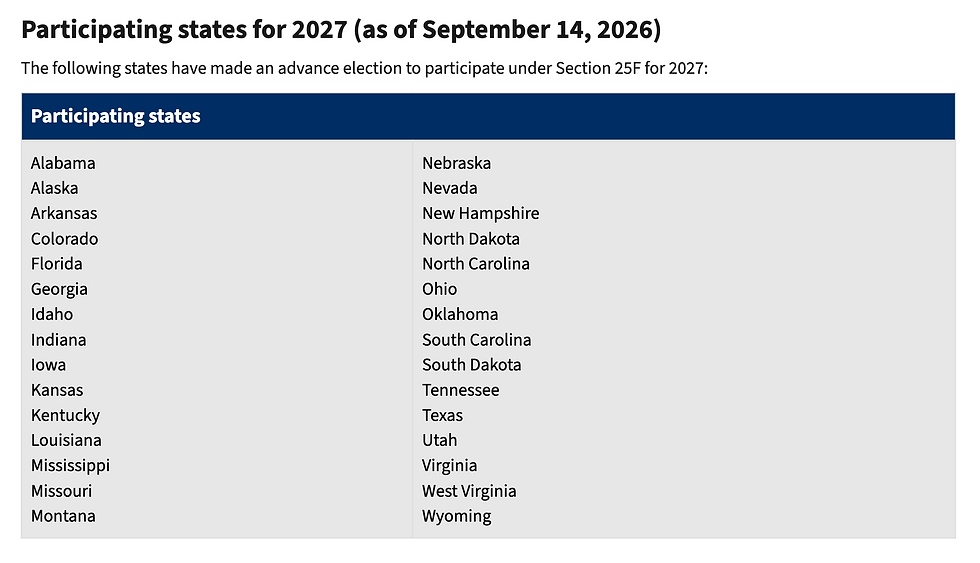
Opponents of the EFTC include teachers’ unions, public school and civil rights groups, some Democratic lawmakers, and fiscal watchdogs from both sides of the aisle. They argue the program acts as a federal voucher system that harms public education by reducing federal funding for public schools, increasing the national deficit, lacking accountability for private schools, allowing discrimination, and subsidizing wealthy families instead of low-income students.
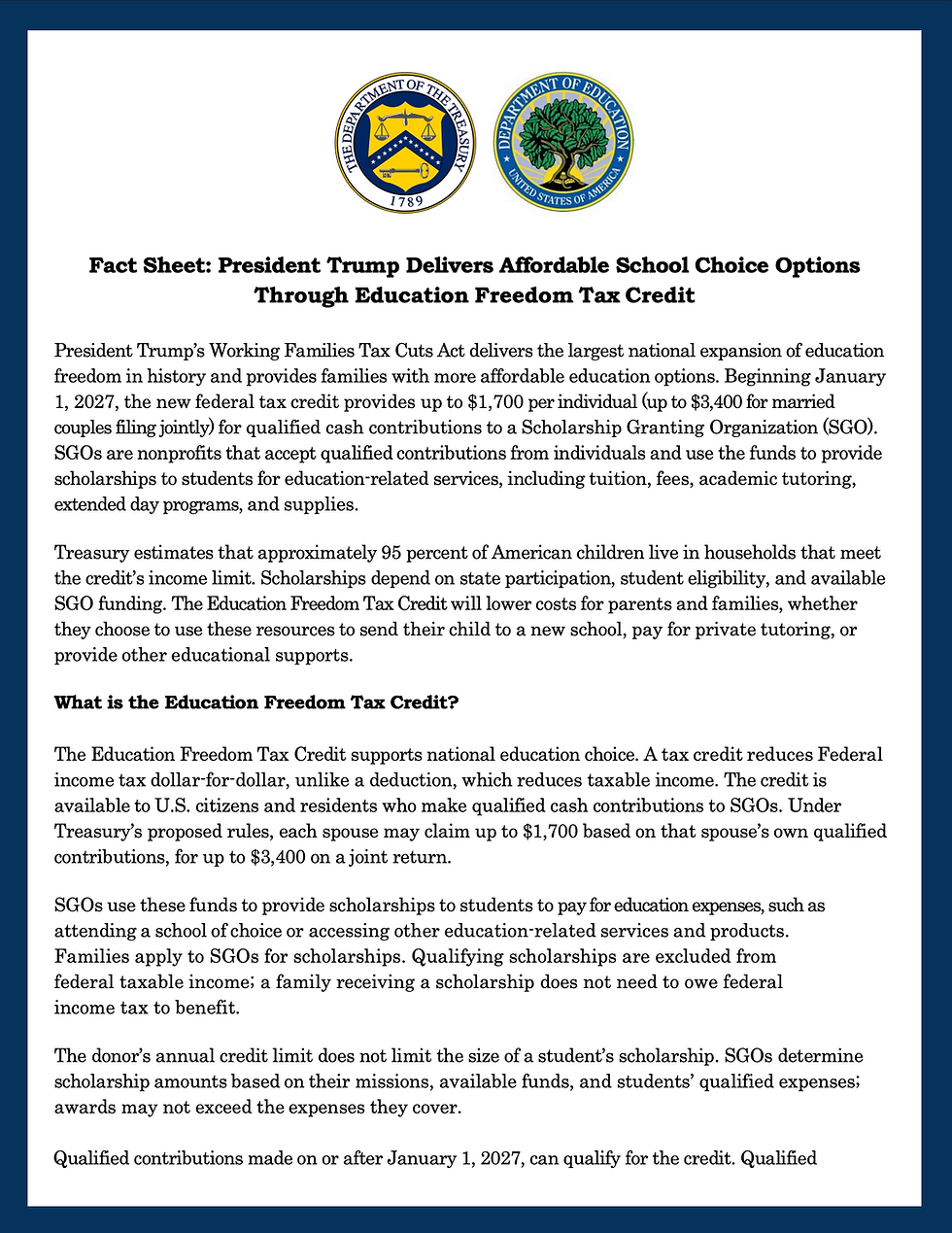
For more information, please see the FACT SHEET:
Thanks for reading Parents Unite! Subscribe to our Substack for free to receive new posts and support our work.